Three years ago, Martha Ferguson woke at 3:30 in the morning at her home in Old Snowmass to watch the sky. She has lived in the valley since 1984, and predawn stargazing from her eastern-facing windows is one of the things she built her life around. That morning she expected Jupiter and Venus hanging near a sliver of moon. Instead, two columns of light blasted upward from a ranch about a quarter mile away, washing out the eastern sky before the planets ever had a chance.
That single bad morning is the reason Old Snowmass now has a name most residents have already seen in a headline: International Dark Sky Community, certified by DarkSky International in February 2026, one of just 20 such places in Colorado and one of only 273 worldwide. What most of the coverage skipped past is the part that actually changes life at your address. Getting that certification meant Pitkin County rewrote its outdoor lighting code, and that code now governs what you can install, when it has to go dark, and how your neighbor's ranch lights get handled if they're the ones blasting through your window at 3:30 a.m.
The Organization Behind the Headline
Ferguson's early-morning frustration turned into WildSky Old Snowmass, a subcommittee she founded under the Snowmass Capitol Creek Caucus, the volunteer neighborhood board that has represented the Snowmass Creek and Capitol Creek valleys since 1974. If you own property in the caucus area, you're already a member, whether you've attended a meeting or not.
WildSky spent the better part of two years building the case for certification: presentations at the Aspen Center for Environmental Studies, the Rotary Club of Aspen, Basalt Public Library, Carbondale Public Library, Colorado Mountain College's Spring Valley campus, and a talk at The Arts Campus at Willits featuring Dr. Jeffrey Hall, executive director of the Lowell Observatory in Flagstaff, Arizona. The consistent message wasn't that porch lights are the enemy. It was that a shielded, downward-facing fixture does the same job as an unshielded one without erasing the horizon for the neighbors.
"Our intention is to safeguard the health of our residents and the survival of wildlife that depends on the dark of night," Ferguson said when the certification was announced. That line matters more than it sounds, because the wildlife argument is where the county's own commissioners have grounded the policy, not just the astronomy.
The Code Nobody Actually Reads
Pitkin County hadn't substantially rewritten its outdoor lighting rules in a generation, and by the county's own account during deliberations, the old language was outdated and ambiguous. The replacement, adopted by the Board of County Commissioners in January 2025 and effective that February, is specific in a way the old rules never were.
Here's what changed, in practice, at a typical Old Snowmass property line:
| Before the rewrite | Under the current code | |
|---|---|---|
| Curfew | Vague, inconsistently enforced | Most exterior lights off 10 p.m. to 6 a.m. |
| Shielding | Not required | Fixtures must direct light downward; unshielded fixtures capped at two per property in higher-activity zones, prohibited outright in low-activity zones |
| Light trespass | Undefined | Capped at 0.2 footcandles measured at the property line, about five feet above grade |
| Holiday lighting | Unregulated by season | Residential allowed Nov. 15 through Jan. 30 only |
| Compliance | No transition period | Five-year window to swap out older fixtures, unless they're already violating curfew or trespass limits |
A few of those lines are worth sitting with. The 0.2-footcandle trespass threshold is the number that actually resolves disputes like Ferguson's original one: it's a measurable standard a code enforcement officer can check with an instrument at your fence line, rather than a subjective complaint about a bright neighbor. Single-family homes also carry a lumens cap tied to square footage, 3.5 lumens per square foot of approved above-grade floor area, with a hard ceiling of 35,000 lumens regardless of house size. Driveway lighting in certain zones has to run on motion sensors, and a sensor with a timer set to five minutes or less is exempt from the curfew entirely, which is the county's way of saying you can still see your steps without lighting the whole meadow until sunrise.
There was some negotiation before the final version landed. Commissioner Francie Jacober pushed during deliberations to shift the curfew's end time earlier than the 7 a.m. originally floated, and the code that passed settled on 6 a.m. It's a small detail, but it's the kind of thing that tells you this wasn't a rubber stamp. County staff and lighting consultants at Clanton Associates went back and forth on where the line should sit before commissioners voted.
None of this means the lights go off entirely. Businesses operating after 10 p.m., public safety lighting, and motion-sensor fixtures are all exempt from curfew. What the code prohibits outright is more telling: facade and landscape illumination, lights aimed at the river, colored or blinking fixtures, and construction-site lighting left running overnight. Those are the categories that used to define a certain kind of new-money Roaring Fork Valley build, and they're now off the table.
Why the County Frames This as a Wildlife Issue, Not Just a View
Pitkin County Commissioner Jeffrey Woodruff, whose district includes Old Snowmass, tied the policy to something bigger than stargazing when the certification came through. "The valley of Snowmass and Capitol Creek are critical wildlife habitats," he said, adding that maintaining the night sky "complements the protections we have put in place through conservation easements and additions to wilderness."
That's not rhetorical. The Capitol Creek and Snowmass Creek valleys carry migrating herds of elk and mule deer through the seasons, along with mountain lions, black bears, and, per DarkSky International's own certification announcement, a newly introduced wolf population. Artificial light disrupts the timing that nocturnal animals and migrating birds depend on, which is why the county's lighting rewrite reads less like an aesthetic preference and more like an extension of the land-use protections Old Snowmass has leaned on for fifty years, the same conservation easements and caucus oversight that have kept the valley from looking like anywhere else in the upper Roaring Fork.
How to Actually See What Got Protected
The policy is abstract until you're standing under the sky it's meant to keep dark. The Snowmass Capitol Creek Caucus holds an annual picnic and star party at Buttercup Ranch each September, typically running from late afternoon into full dark, and it remains the most direct way to see what a properly shielded valley actually looks like once the sun is down.
The momentum has also spread past Old Snowmass this year. WildSky partnered with Aspen Center for Environmental Studies on Stars Above Aspen, the astronomy night held atop Aspen Mountain each August, where guided telescope stations and a Fiske Planetarium mini-dome draw both locals and visitors up the gondola after the last chair. It's a sign that what started as one resident's frustration with a neighbor's floodlights has become part of the valley's broader identity, not a rule confined to one caucus boundary.
Local photographer Pete McBride, whose images of the Milky Way over Capitol Peak and Mount Daly have circulated alongside the caucus's advocacy work for years, put it about as plainly as anyone: this is a landscape worth protecting specifically because so few places like it are left with a sky this uninterrupted.
What This Actually Means If You Live Here
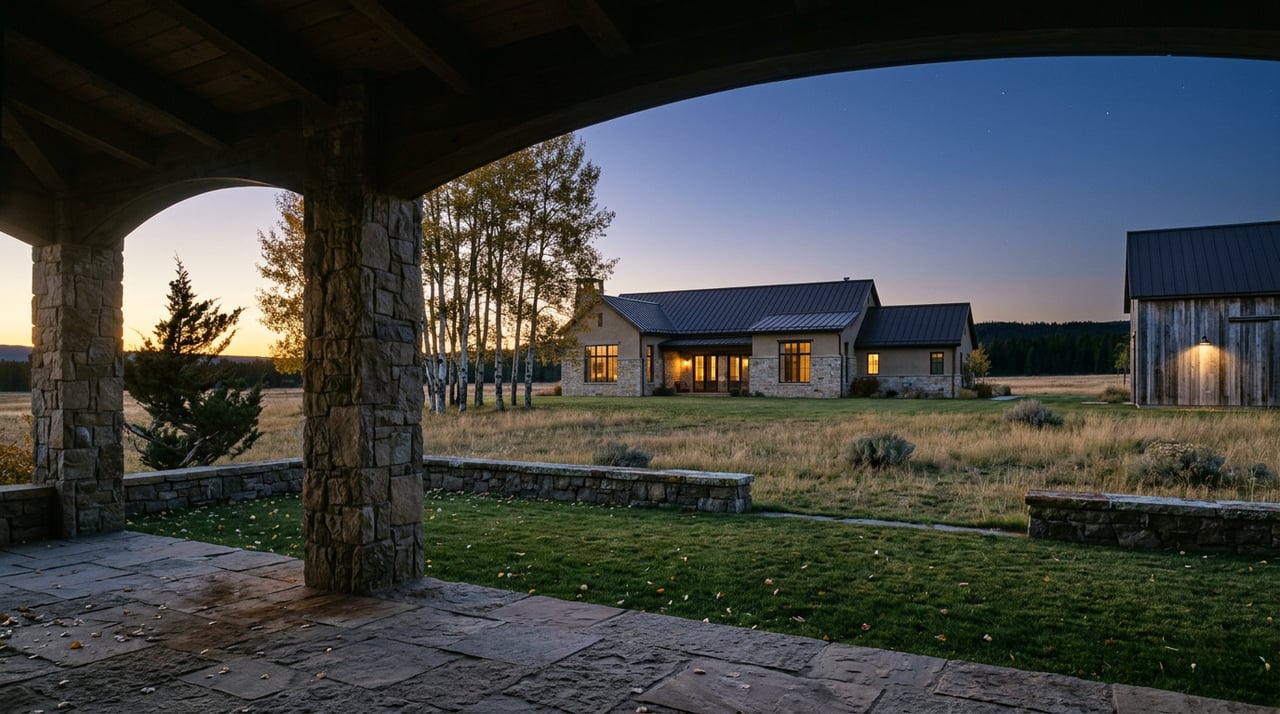
If you own property in the caucus area, the relevant question isn't whether Old Snowmass is now famous for its stars. It's whether your own fixtures fall inside the new lines. A porch light on a timer, a shielded barn light aimed at the ground, a motion-sensor driveway lamp, all of that clears the bar without much thought. Unshielded floodlights left running past 10 p.m., facade wash lighting, or holiday displays left up past January all put you on the wrong side of a rule that now has an actual enforcement mechanism behind it, not just a strongly worded newsletter from the caucus.
The five-year window means nobody's getting a citation for last decade's fixtures overnight. But it also means the clock is already running, and the properties that get ahead of it now are the ones that won't be scrambling in 2030.
For residents who've lived here through the Ferguson years, watching a personal frustration turn into county code and then into a global certification is its own kind of local history. For anyone newer to the valley, it's worth knowing that the dark sky over Capitol Creek isn't an accident of remoteness. It's the result of a specific set of rules that your own porch light is now part of.
If you're looking to understand what makes a specific Old Snowmass property, its acreage, its sightlines, its place inside the caucus boundary, actually work for the way you want to live here, Saslove and Warwick has spent years in this exact corner of Pitkin County and is glad to talk through it.