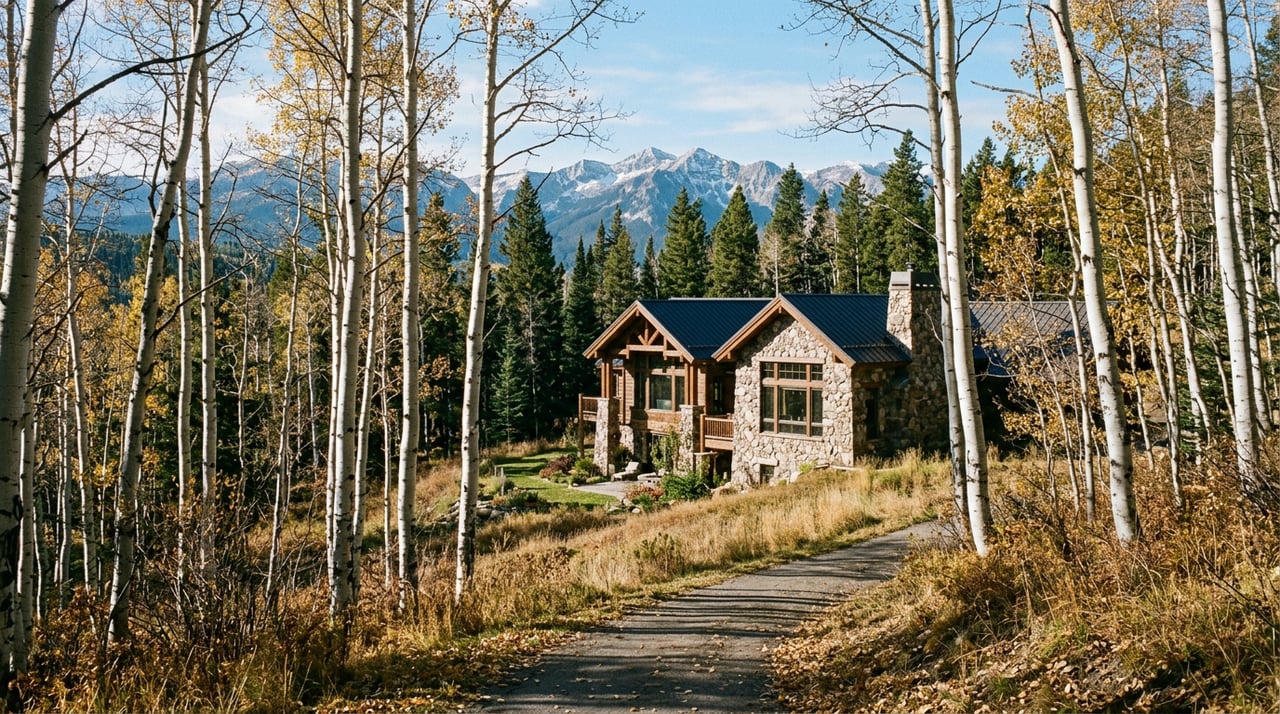
Most Aspen locals treat leaf peeping the way they treat powder days: watch the forecast, wait for the right window, then go. That patience usually pays off. Aspen's aspens typically hold color for two to three weeks, giving everyone from Hunter Creek regulars to Sunday gondola riders plenty of chances to catch a good day.
This year, waiting is the wrong strategy.
Adam McCurdy, forest and climate director at the Aspen Center for Environmental Studies, told the Aspen Times this month that what's happening to the valley's aspens right now is not the slow, orderly color change residents are used to. Colorado just recorded its hottest summer on record on the heels of one of its worst snowpack years, and the trees are responding by shutting down early rather than putting on the usual show. The practical effect is a shorter, less forgiving window than the one locals have learned to expect, and it lands at the same moment the mountain has already scaled back the easiest way to see it.
The Drought Changed the Rules, Not Just the Colors
A normal Aspen fall works like this: high elevations turn first, color rolls downhill over two or three weeks, and the whole valley gets a long runway to catch a good day somewhere. This year's drought compresses that runway. OpenSnow meteorologist Alan Smith has pointed to the same mechanism driving other dry years across Colorado: below-average late-summer rain and an early spring leaf-out push the whole cycle forward, and drought-stressed leaves often skip the long gold transition and go straight to a duller yellow-brown before dropping.
Forecaster Seth Linden's read for this specific stretch of the Elk Mountains puts Aspen and Crested Butte's peak somewhere between September 18 and October 1. That's a real window, but it's also narrower than the loose "last two weeks of September into October" guidance locals are used to hearing, and it assumes conditions hold. McCurdy's advice for anyone trying to beat the clock is specific: this year, the safest color is on trees at higher elevation and on north-facing slopes, where drought stress has been less severe. Lower, south-facing stands are the ones most likely to brown out early.
Four Weekends, Not a Season
Here's the part that actually changes how residents should plan the next month. The Silver Queen Gondola on Aspen Mountain and the Elk Camp Gondola in Snowmass both ran daily through September 7. After that, both switch to weekends-only for the rest of their fall season, then close.
| Weekend | Dates |
|---|---|
| This weekend | Sept 11-13 |
| Next | Sept 18-20 |
| Following | Sept 25-27 |
| Final | Oct 2-4 |
That's the entire remaining window for riding up to the top of Aspen Mountain this fall. Four weekends. We're already inside the first one. If Linden's September 18 to October 1 peak estimate holds, the sweet spot for gondola access lines up with the middle two weekends on that list, not the last one. Anyone planning to wait for a picture-perfect Saturday in early October risks showing up to bare branches at 11,200 feet.
Where the Elevation Math Actually Points
If McCurdy's guidance about elevation and aspect is right this year, that reshuffles the usual local rotation a little.
- The top of Aspen Mountain, via the Silver Queen Gondola. At 11,200 feet, this is the highest ground on this list and one of the better bets for holding color into late September, but it's only reachable on the four remaining gondola weekends.
- Cathedral Lake Trail. Climbs high enough into the Castle Creek Valley that it should track with McCurdy's higher-elevation advice better than most valley-floor options.
- Smuggler Mountain Trail. Close to town and popular for a reason, but lower and more exposed than the alpine options. This is one to do sooner rather than later.
- North Star Nature Preserve. Sits along the Roaring Fork corridor at the lowest elevation of the group, which likely means it's first to lose its color this year. Worth knowing separately: water levels there are typically too low for paddling by fall regardless of drought conditions, so it was never a fall-color-by-canoe spot to begin with.
- Castle Creek Road to Ashcroft. Still the reliable, quieter alternative to Maroon Bells traffic, with a stop at the ghost town itself and lunch at Pine Creek Cookhouse. It runs through valley terrain rather than high alpine, so treat it as a good early-to-mid-window drive rather than a save-it-for-last one.
None of this means the color will be bad everywhere. It means the reliable spots this year are not necessarily the same as the reliable spots most years, and the window for checking them by gondola is fixed rather than open-ended.
One New Line Item at the Bells
Anyone who bikes to Maroon Lake regularly should know about a change that took effect this season. Starting May 15, 2026, the U.S. Forest Service began charging e-bike riders a $5 entry fee at the Maroon Bells Scenic Area, the same rate long applied to motorcycles, under a policy that classifies e-bikes as motorized vehicles. Regular bicycles still ride free. It's a small charge, expected to generate roughly $40,000 a year toward maintaining the site, but it's new, and Forest Service officials have signaled it's the first piece of a broader look at how the Bells are managed and funded going forward. If you haven't ridden up since last summer, this is the year that changes.
The Season Keeps Its Regular Rhythm Anyway
Not everything is moving fast. The Aspen Farmer's Market, running since 1998, continues its Saturday morning run through early October, same as always, produce stands and artisan tables lining up regardless of what the aspens are doing on the hillsides above town. It's worth remembering that fall in Aspen isn't only a countdown. Some of it still runs on the calendar it always has.
But the leaf color this year genuinely doesn't. Between a drought that's pushing the whole cycle earlier and a gondola schedule that only leaves four weekends on the table, the smart move is the opposite of the usual wait-for-peak instinct. Go this weekend if you can. Go again on the eighteenth. Don't save the good hikes for October and assume they'll still be gold when you get there.
If you're weighing a move to a neighborhood where you'd actually get to watch these seasons unfold from your own deck, Saslove and Warwick can walk you through what's available across Aspen, Snowmass and the surrounding valley, from in-town residences to properties tucked along the same corridors these trails run through.