By Saslove & Warwick
Aspen's built environment is one of the most architecturally layered in the American West. Here, architectural styles range from restored Victorian miners' cottages on the West End's tree-lined streets to glass-and-steel mountain modern estates on Red Mountain. The city's Historic Preservation program protects over 60 designated landmark structures, while Aspen's design review process pushes new construction toward a level of material and craft quality rarely seen in mountain resort markets.
We at Saslove & Warwick work across every neighborhood in this market, and this guide gives you the framework to read Aspen's architecture the way we do.
Key Takeaways
- Victorian and historic: The West End and downtown core contain the highest concentration of protected 19th-century structures in the market.
- Ski chalet and alpine: Traditional mountain forms with steep pitches, heavy timber, and stone remain prevalent across mid-century residential neighborhoods.
- Mountain modern: Contemporary design integrating glass, steel, and reclaimed wood dominates new construction and commands the highest price points.
- Adaptive reuse: Former mining-era commercial and industrial structures have been converted into distinctive residential and mixed-use properties throughout the core.
Victorian and Historic Architecture: Aspen's Founding Layer
Aspen's Victorian-era buildings date from the 1880s and 1890s, when silver mining generated enough wealth to construct an opera house, a hotel, and hundreds of residential cottages within a single decade.
Defining Characteristics of Aspen's Victorian Architecture
- Wood-frame construction: Balloon-frame structures clad in painted lap siding reflect the materials and methods of the silver boom era.
- Decorative millwork: Porch brackets, turned balusters, and gable trim distinguish Queen Anne and Italianate forms from simpler miner's cottage typologies.
- Modest footprints: Original lots and structures are small by contemporary standards, making historic properties among the most intimate in the market.
- Landmark designation: Designated landmarks carry preservation obligations and eligibility for transferable development rights with real monetary value in Aspen's land market.
Restored Victorian properties in the West End trade at significant premiums because their supply is fixed and their setting is irreplaceable.
Ski Chalet and Alpine: The Mid-Century Mountain Vernacular
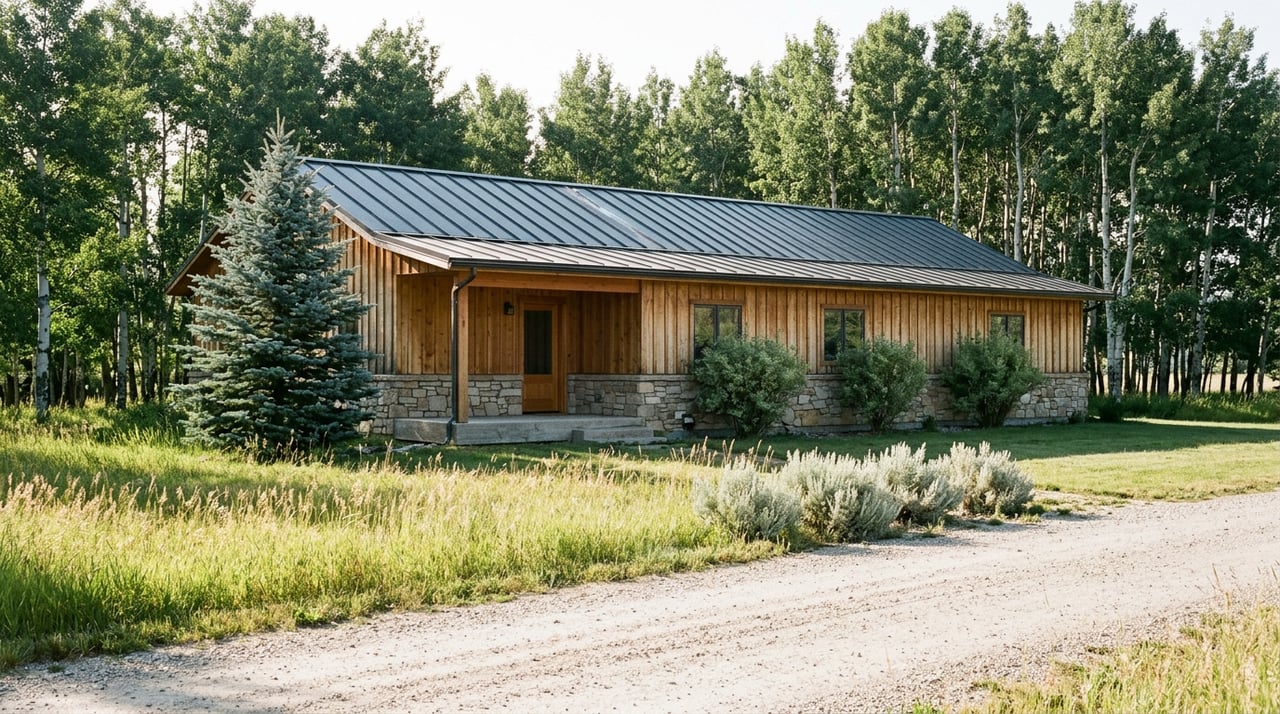
With steep-pitched rooflines, heavy timber structural elements, stone fireplaces, and massing, this alpine vernacular is concentrated in Aspen Grove, on the flanks of Smuggler Mountain, and in the older sections of the Highlands corridor.
Defining Characteristics of Alpine and Chalet-Style Homes
- Steep gabled rooflines: Pitches of 10:12 or greater reflect both snow-shedding function and European alpine precedents.
- Heavy timber framing: Exposed structural timber at ridge beams, purlins, and post-and-beam connections serves both structural and aesthetic purposes.
- Natural stone: Locally sourced stone appears at foundations, fireplace surrounds, and exterior cladding in most authentic examples.
- Compact massing: Chalet-form homes organize vertically, with living areas stacked above grade-level entries and ski storage.
Well-maintained examples of this typology have proven durable in Aspen's market, particularly among buyers who want genuine mountain character rather than a contemporary approximation of it.
Mountain Modern: Aspen's Contemporary Design Language
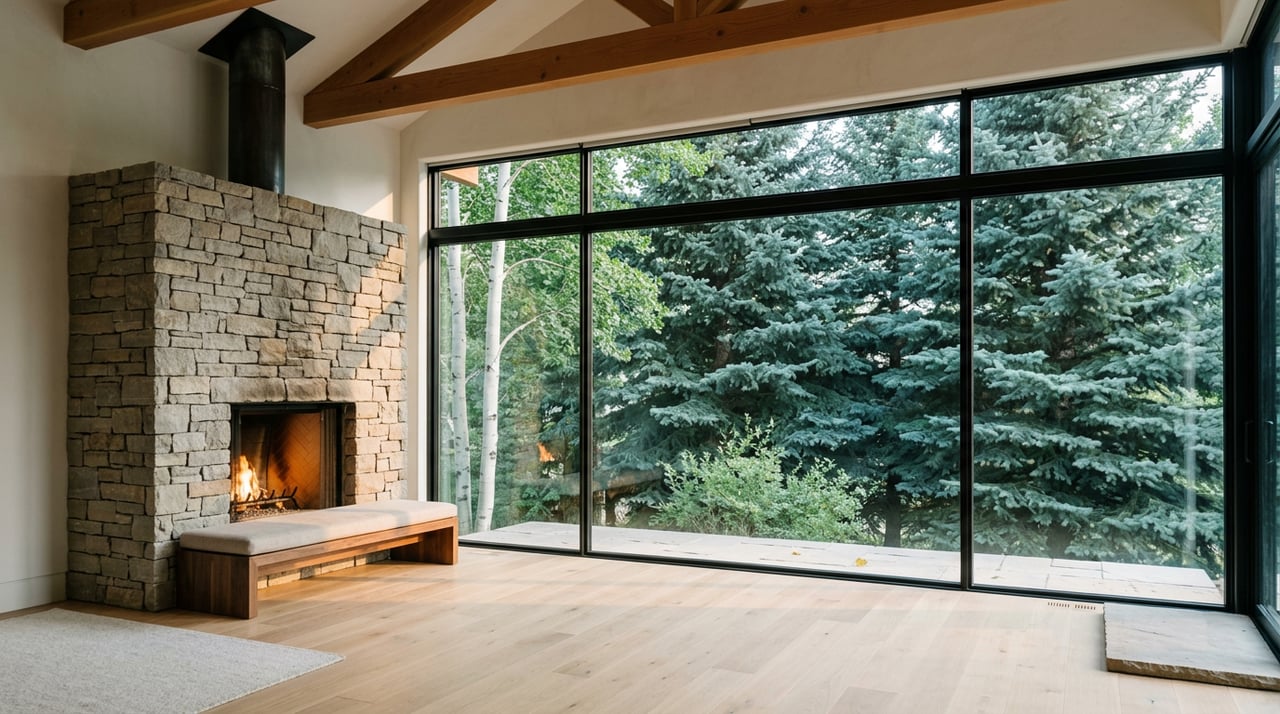
The past two decades of new construction in Aspen have been defined by floor-to-ceiling glass oriented toward Aspen Mountain and the Elk Range, structural steel deployed with the precision of historic timber, reclaimed wood warming minimal interiors, and building envelopes that engage topography rather than flatten it.
Defining Characteristics of Mountain Modern Architecture
- Expansive glazing: Large glass walls frame views of Aspen Mountain, Castle Creek Valley, or the Maroon Bells as deliberate compositional decisions.
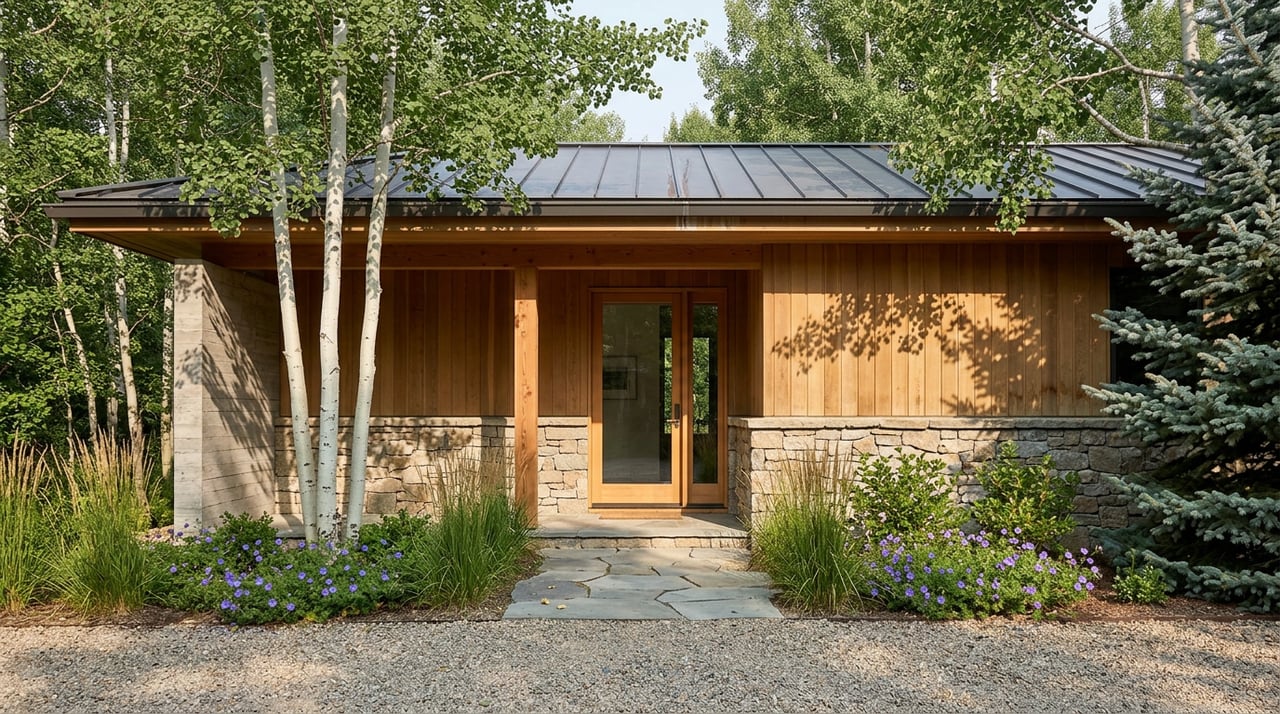
- Material contrast: Board-formed concrete or weathering steel paired with reclaimed barn wood or wire-brushed oak defines the typology's material palette.
- Low-slope rooflines: Flat or low-pitch roofs contrast deliberately with the Victorian and alpine pitched roofs elsewhere in the market.
- Indoor-outdoor integration: Covered terraces, heated stone decking, and operable wall systems extend livable space into Aspen's shoulder-season conditions.
- Sustainability integration: High-performance envelopes, radiant heating, and photovoltaic systems are standard at the upper end of the mountain modern market.
Mountain modern properties in Aspen's premier locations represent the market's highest price points, and distinguishing a genuinely resolved design from a well-marketed approximation of one is where knowledgeable representation makes a material difference.
FAQs
Can historic Victorian properties in Aspen be expanded or renovated?
Yes, but all work on designated landmark properties requires review and approval by the Historic Preservation Commission. Additions must demonstrate compatibility with the original structure's scale, materials, and character through a formal application and HPC hearing process before permits are issued.
Are there restrictions on what can be built on vacant lots in Aspen?
Aspen's land use code imposes floor area limits, height restrictions, setback requirements, and design compatibility standards on all new construction.
Which architectural style holds value best in Aspen's market?
All three primary typologies have demonstrated strong value retention when the property is well-maintained and well-located. Mountain modern properties on Red Mountain and Starwood have shown the strongest appreciation at the upper end, while well-preserved Victorian cottages in the West End hold value through scarcity and irreplaceability rather than size or amenity.
Contact Saslove & Warwick Today
The style, era, and design quality of a property in Aspen shape its value, regulatory obligations, and long-term appreciation in ways that require genuine local knowledge to navigate. We've worked across every neighborhood and every architectural typology this market presents, from landmark Victorian cottages in the West End to mountain modern estates on Red Mountain.
In this market, how a home was built, when it was built, and who designed it are as consequential as where it sits and what it costs. Reach out to us at Saslove & Warwick today.